








Vacation rental invoices in Croatia: what to know and how to issue them

End of season. All guests gone, the property ready for next year. You go through your records. Somewhere a payment was received in cash with no invoice issued. One guest needed a VAT invoice for their company, but got the standard one instead. Another received nothing because "there was nothing to hand."
Every vacation rental owner runs into situations like these at some point. The problem is that the Croatian Tax Administration does not distinguish between "I didn't know" and "I didn't care."
Invoicing is not a complicated part of the job, but it's easy to neglect when everything is running smoothly, until it suddenly becomes a problem. With the changes brought by Fiscalization 2.0 on 1 January 2026, some owners now face additional technical obligations that did not exist before. This guide explains exactly what belongs on an invoice, how advance payment invoices work and why they matter, who must fiscalize, and how the whole process can be digitized.
Who must issue invoices for vacation rental accommodation?
The obligation to issue invoices applies to all vacation rental owners who charge for accommodation, regardless of property size or number of guests. Under the Income Tax Act and the VAT Act, every charged accommodation service must be documented with an invoice.
In practice, there are two main categories of vacation rental owners with different obligations:
- Private flat-rate taxpayer who pays income tax on property income under a Tax Administration ruling. Not registered for VAT, not subject to fiscalization under the Fiscalization Act (NN 89/2025). Issues a standard invoice without VAT, with no fiscalization requirement.
- Self-employed owner (sole trader) or corporate entity operating a registered hospitality or tourism business. Subject to fiscalization under the new Fiscalization Act.

If you are unsure which category applies to you, check whether you receive an annual Tax Administration ruling on flat-rate income tax from property rental, or whether your activity is registered as a sole trader business.
If you charge for accommodation, you must issue an invoice. The only difference is what it needs to contain.
What must a vacation rental invoice include?
The required elements differ depending on the owner's tax status.

Private flat-rate taxpayer
Under the Income Tax Regulation, an invoice issued by a private flat-rate taxpayer must include:
1. Name, address and OIB (tax ID) of the rental owner
2. Date of issue
3. Invoice number in an unbroken sequence (e.g. 1/2026, 2/2026)
4. Name, address and, for B2B invoices, OIB of the recipient (required for company invoices)
5. Description of the service: type of accommodation, property address, dates of stay, number of nights
6. Unit price and total amount
7. VAT exemption note under Article 90 of the VAT Act
8. Payment method (cash, card, bank transfer, OTA virtual card, etc.)
Private flat-rate taxpayers are not subject to fiscalization under the Fiscalization Act (NN 89/2025). Their invoices do not require a JIR, ZKI or QR code.
Sole trader or VAT-registered owner
In addition to the elements above, a fiscal invoice issued by a sole trader must include from 1.1.2026:
9. JIR (Unique Invoice Identifier) generated by the Tax Administration in real time
10. ZKI (Issuer Security Code) generated by the certified fiscalization software
11. QR code for invoice verification via the Tax Administration app
12. Operator code (OIB of the person who physically issued the invoice, if different from the owner)
For VAT-registered owners, the invoice must also include the VAT identification number and the VAT amount broken down by rate.
Same content, different technical form. A private flat-rate taxpayer can write the invoice in a program or Word. A sole trader must fiscalize it through certified software from 2026.
Advance payment invoices and final invoices: how it works
An advance payment invoice is issued when a guest pays part or all of the reservation amount upfront, before the stay. This is common in vacation rentals: a guest pays a deposit or the full amount at the time of booking, but arrives weeks or months later.

The rule is clear: when money is collected, an invoice must be issued. It is not acceptable to wait until check-out and then issue an invoice for an amount collected earlier.
The process works as follows:
1. At the time of payment, an advance payment invoice is issued for the amount received
2. On the day of check-out or when the service has been fully completed, a final invoice is issued for the total service amount
3. The advance payment invoice is then cancelled (a credit note is issued) and the data is sent to the Tax Administration
4. The guest receives the final invoice showing the total amount, the advance already paid, and any remaining balance due
The cancellation step is one that is often skipped. If the advance payment invoice is not cancelled, the Tax Administration's records show the same income twice: once as an advance and once as a final invoice. This is an error that can cause problems during a tax audit.
For sole traders who have been subject to fiscalization since 2026, both the advance payment invoice and the credit note must go through certified software in real time.
An advance payment that is not documented with an invoice is no less of an advance payment in the eyes of the Tax Administration. It is simply unrecorded income.
What is the difference between a VAT invoice and a standard invoice?
A VAT invoice (R1) is an invoice with VAT shown separately, which the recipient can use as an input VAT deduction. Only VAT-registered entities can issue R1 invoices. A standard invoice (R2) contains no VAT and is issued to private individuals or entities that do not need or cannot claim a VAT deduction.
In practice for vacation rental owners:
- A guest paying for their own stay asks for a standard invoice (R2 or plain receipt)
- A guest on a business trip or attending a conference asks for a VAT invoice in the company's name
- An agency or company paying for a group stay asks for a VAT invoice with the company's OIB
Private flat-rate taxpayers and sole traders not registered for VAT cannot issue a VAT invoice with VAT shown. In that case, explain to the guest or company that you are not VAT-registered and issue a standard invoice with the exemption note under Article 90 of the VAT Act. The invoice is legally valid, but the company cannot use it to reclaim input VAT.
A flat-rate taxpayer cannot issue a VAT invoice. But they can issue a legally valid invoice. That is the distinction worth knowing how to explain to a guest.
What did Fiscalization 2.0 change from 1 January 2026?
Fiscalization 2.0 is the name for the set of changes introduced by the new Fiscalization Act (NN 89/2025) that came into force on 1 January 2026. They cover two distinct things: extending Fiscalization 1.0 to all payment methods in consumer transactions, and introducing e-invoices for B2B transactions.
Private flat-rate taxpayers
For private owners paying flat-rate income tax on property income, nothing has changed. Under the Fiscalization Act (NN 89/2025) and as confirmed on the Tax Administration portal, private flat-rate taxpayers are not subject to consumer fiscalization and have no obligation to issue or receive e-invoices. Invoices continue to be issued in the same way as before.
Sole trader vacation rental owners
For sole traders operating a registered rental business, the following changes apply:
- From 1.1.2026. (Fiscalization 1.0 extension) all invoices issued to end consumers (private individuals, guests) must be fiscalized regardless of payment method. This includes cash, card and bank transfer. It also applies to advance payment invoices and credit notes.
- From 1.1.2026. (Fiscalization 2.0) sole traders must be able to receive e-invoices from business partners (suppliers, agencies, services). Sole traders not registered for VAT can only receive e-invoices, not send them. For receiving, the free MIKROeRACUN application from the Tax Administration or any authorized information intermediary can be used.
- From 1.1.2027. full e-invoice obligations apply for entities not registered for VAT, including the obligation to send and fiscalize e-invoices to other business entities.
Note: invoices issued to guests (private individuals) are not part of Fiscalization 2.0. They continue to be fiscalized under the rules that applied before 2026. From 1.1.2027. all sole traders, including those outside the VAT system, will be required to send and fiscalize e-invoices to business entities.
VAT-registered owners
VAT-registered taxpayers must, from 1.1.2026., fiscalize all consumer invoices (B2C) and simultaneously issue and receive e-invoices in all domestic business transactions (B2B, B2G).
The key distinction: a private flat-rate taxpayer is not covered by Fiscalization 2.0. A sole trader is, but the obligation to send B2B e-invoices does not begin until 2027.
The most common invoicing mistakes vacation rental owners make
- Invoice with no service description. "Accommodation 500 EUR" is not sufficient. It should read: "Accommodation, apartment XY, address, 5 nights, 20.-25.7.2026., 100 EUR/night."
- No OIB or company name for B2B invoices. For company guests, the recipient's OIB is mandatory. Without it, the company cannot use the invoice in their own records.
- Advance payment with no invoice and no credit note. The most common mistake in practice: the advance was collected but no invoice was issued. Or an invoice was issued but not cancelled when the final invoice was created.
- Non-sequential invoice numbers. Invoice numbers must be continuous and unique. Duplicate or skipped numbers are a classic finding in tax inspections.
- No VAT exemption note. Private flat-rate taxpayers not registered for VAT must state that the service is exempt from VAT under Article 90 of the VAT Act.
- Sole traders not fiscalizing bank transfer invoices from 2026. This new obligation applies from 1.1.2026. to all invoices issued to private individuals, including non-cash payments.

The most common mistake is not fraud. It is carelessness. Tax inspectors do not distinguish between the two.
How Rentlio One supports invoicing and fiscalization
Rentlio One is not a standalone invoicing tool. It is a platform where reservations, guests and financial records are all in one place. That is the difference you notice from the very first invoice.
No double data entry
Guest details, stay dates and amounts are already in the system from the reservation. The invoice is issued directly from that data, without re-entering anything. For owners who used to copy details from Booking.com into a Word template, this is one of the first things they notice.
Advance payment invoices and credit notes are part of the same reservation
In Rentlio One, the advance payment invoice and the final invoice are handled as part of the same reservation. When the final invoice is issued, the credit note for the advance is processed within the platform automatically and the data is sent to the Tax Administration. There is no manual tracking of which advance has been cancelled and which has not.
Fiscalization 2.0 through moj-eRačun
For vacation rental owners who issue invoices to companies (B2B, B2G), Rentlio One is integrated with moj-eRačun, a certified information intermediary for e-invoice exchange and fiscalization. Setup involves three steps:
1. Sign up for the service at shop.moj-eracun.hr (or choose an alternative intermediary and export invoices in UBL 2.1 format)
2. Map your services to KPD classification codes within Rentlio (instructions for Rentlio One)
3. Assign authorization to the information intermediary in the Tax Administration's FiskApplication
Invoices issued to guests (private individuals) are not part of this flow and continue to be fiscalized under the existing rules.
All records in one place
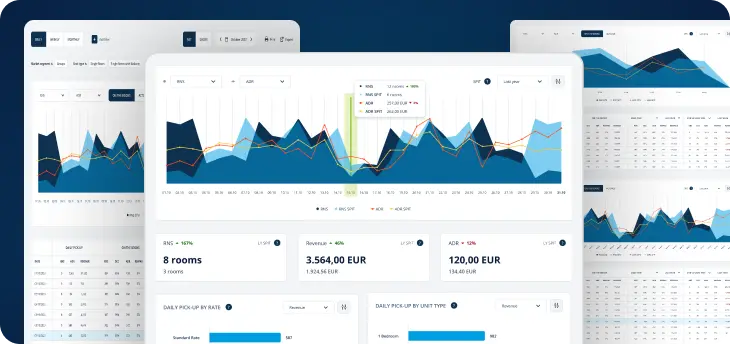
All issued invoices, including advances, credit notes and final invoices, are available in the dashboard by date, guest and property. At the end of the season or during a tax audit, all financial records are in one place.
How to digitize invoicing and stop losing time
Manual invoicing in Word or Excel works fine with one guest a week. With three properties, twenty guests a season and advance payments to track, it becomes a real burden and a source of errors. For sole traders who have been subject to fiscalization since 2026, Word and Excel are no longer a legally valid option for invoices issued to private individuals.
Rentlio One handles invoicing within the same platform used to manage reservations. Guest details, dates and amounts are already in the system from the reservation, and the invoice is issued directly from that data without double entry. All issued documents are available in the dashboard by date, guest and property.
A digitized invoice is not just a time saving. You eliminate the possibility of error and the risk of a tax inspection finding at the same time.
Get your invoicing sorted before the season, not during it
More than 1,700 properties across the region already use Rentlio. Owners who moved away from manual invoicing consistently report the same three things: less stress, fewer errors and a clearer financial picture at the end of the season.
Invoicing, Channel Manager, Booking Engine and eVisitor guest registration all in one application.
The 2026 season is approaching. Book a free meeting and see how Rentlio One works for your property.
Frequently asked questions (FAQ)
Do I need to issue an invoice for an advance payment immediately when I collect it?
Yes. An invoice must be issued at the time of collection, regardless of whether it is an advance or the full amount. It is not acceptable to wait until check-out. When the service has been fully completed, a final invoice is issued and the advance payment invoice is cancelled. The credit note must be kept in the records just like the original invoice.
Am I subject to Fiscalization 2.0 as a private flat-rate taxpayer?
No. Private owners paying flat-rate income tax on property income are not subject to fiscalization under the Fiscalization Act (NN 89/2025). This is confirmed on the official Tax Administration portal. Invoices continue to be issued in the same way as before, without JIR, ZKI or QR code.
As a sole trader, must I fiscalize bank transfer payments from 2026?
Yes. From 1 January 2026, all sole traders must fiscalize all invoices issued to end consumers regardless of payment method, including bank transfers. This also applies to advance payment invoices and credit notes. Certified software and a FINA digital certificate are required.
What if a guest asks for a VAT invoice and I am a flat-rate taxpayer?
Flat-rate taxpayers not registered for VAT cannot issue a VAT invoice with VAT shown. Issue a standard invoice with the note: "VAT exempt under Article 90 of the VAT Act." The invoice is legally valid, but the company cannot use it to reclaim input VAT.
Can I use Word or Excel to issue invoices?
Private flat-rate taxpayers can use Word, Excel or any other tool. Sole traders cannot use Word or Excel for invoices issued to private individuals from 1.1.2026. because those tools do not support fiscalization. Certified software is required.
Do I need to issue an invoice if Booking.com collects payment on my behalf?
It depends on the payment model. If the guest pays you directly on site, you must issue an invoice. If Booking.com collects the payment on your behalf via a virtual card, the invoicing obligation toward the guest is taken on by Booking.com. You still need to maintain proper records of amounts collected.
How long must invoice records be kept?
Under Croatian tax regulations, invoices must be kept for at least 11 years. Rentlio One keeps all issued invoices in the dashboard with the ability to search and download by date, guest and property.


Daniel Herman is a growth marketing enthusiast with 10 years of marketing experience who enjoys thinking strategically and seeing the bigger picture. He writes about everything related to developing marketing activities and KPIs, branding, and taking a long-term approach to success, always with the goal of sharing useful ideas and inspiring action.